

Uterine Fibroids, Endometriosis & Chronic Pelvic Pain Management
Thorough diagnostic mapping and individualised medical or fertility-sparing surgical management for women experiencing symptomatic uterine fibroids (leiomyomas), endometriosis, adenomyosis, ovarian cysts, and debilitating menstrual or pelvic pain.
Your questions, answered simply
Tap a topic to read more.
Diagnostic Pelvic Ultrasound & Clinical Mapping of Fibroids and Endometriosis
Uterine fibroids (benign smooth-muscle tumours of the uterus) and endometriosis (the presence of endometrial-like tissue outside the uterine cavity) are among the most common causes of severe menstrual pain (dysmenorrhoea), heavy prolonged bleeding (menorrhagia), deep pain during intercourse (dyspareunia), pelvic pressure, and subfertility in South African women.
Accurate treatment begins with precise anatomical mapping. During your consultation, Dr Tebo Rasenyai classifies uterine fibroids according to the international FIGO system — distinguishing submucosal fibroids (which protrude into the uterine cavity and affect implantation and bleeding), intramural fibroids (within the muscular wall), and subserosal fibroids (on the outer surface) — while screening for ovarian endometriomas and adenomyosis.
- Submucosal Fibroids (FIGO Types 0–2): Frequently cause heavy menstrual flooding, blood clots, anaemia, and delayed conception; often amenable to incision-free hysteroscopic resection.
- Intramural & Subserosal Fibroids (FIGO Types 3–7): May cause pelvic bulk symptoms, bladder frequency, lower back ache, and uterine enlargement.
- Endometriosis & Adenomyosis: Characterised by cyclical or chronic pelvic pain, bowel or bladder pain during menstruation, and painful intercourse requiring targeted hormonal or laparoscopic intervention.
Conservative Medical Therapy vs Fertility-Sparing Myomectomy & Excision
Not every fibroid or ovarian cyst requires surgery. Treatment is tailored to your symptom severity, fibroid location, haemoglobin level, age, and whether you wish to conceive now or in the future.
Medical management options include non-hormonal antifibrinolytic therapy (tranexamic acid), targeted anti-inflammatory regimens, combined hormonal suppression, progestogen therapy, levonorgestrel intrauterine systems (Mirena), and GnRH analogues. When surgical intervention is required, fertility-sparing myomectomy or laparoscopic endometriosis excision is carefully planned to restore normal pelvic anatomy.
Preparing for Your Pelvic Ultrasound Assessment (Bladder Protocol)
To help Dr Rasenyai obtain the clearest ultrasound images during your visit to Suite D, Room 2, please note our bladder preparation protocol: if a transabdominal scan is needed (particularly for large fibroids extending toward the umbilicus or for patients who cannot undergo an internal scan), arrive with a full bladder by drinking 3 to 4 glasses of water an hour beforehand.
If a high-resolution transvaginal ultrasound is performed to evaluate the endometrium, ovaries, or deep endometriosis nodules, you will be asked to empty your bladder right before the examination.
Long-Term Symptom Control & Quality-of-Life Restoration
Chronic pelvic pain and heavy menstrual bleeding should never be dismissed as 'normal period pain'. Left untreated, chronic blood loss frequently leads to severe iron-deficiency anaemia, chronic fatigue, missed workdays, and emotional distress.
Our practice pairs definitive gynaecological treatment with rapid correction of iron deficiency (including oral or intravenous iron replenishment where indicated) and structured long-term follow-up to prevent symptom recurrence.
Ready when you are.
All medical aids welcome, with no co-payments on consultations.
Patients often ask
Can uterine fibroids be treated without removing the uterus (hysterectomy)?
Yes. Depending on the size, number, and location of the fibroids and your fertility goals, options include medical therapy to control heavy bleeding or fertility-sparing myomectomy (removing only the fibroids while preserving the uterus). Hysterectomy is reserved for women who have completed childbearing and require definitive surgical relief.
How is endometriosis definitively diagnosed?
While clinical history, specialist pelvic examination, and transvaginal ultrasound (which can detect ovarian endometrioma cysts and deep nodules) provide strong clinical evidence to begin medical treatment, laparoscopy remains the gold standard for visualising and histologically confirming superficial peritoneal endometriosis.
When should heavy menstrual bleeding be evaluated by a gynaecologist?
You should schedule an assessment if your period lasts longer than 7 days, if you pass large blood clots, if you need to change sanitary protection every 1 to 2 hours, if you bleed between periods or after intercourse, or if you feel fatigued, dizzy, or short of breath.
Related care
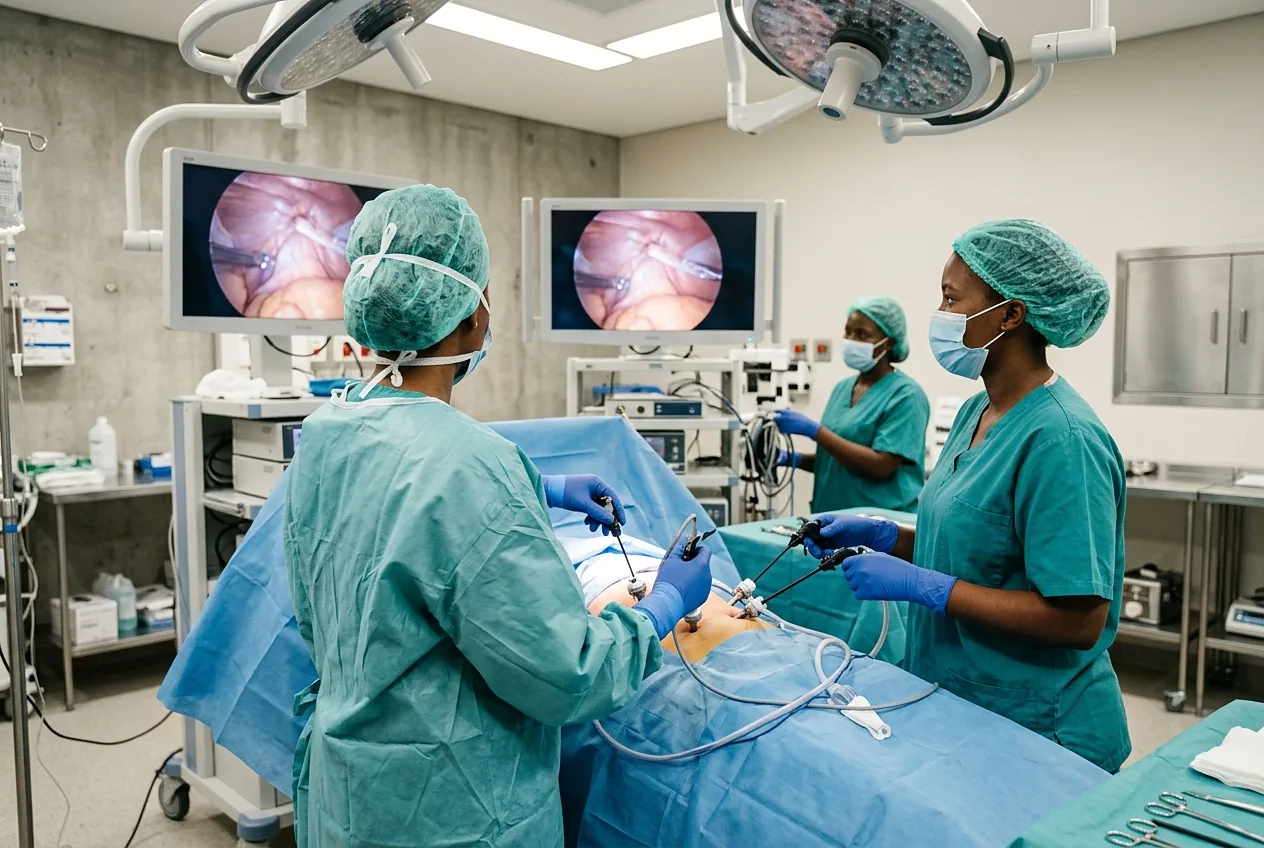
Keyhole (Laparoscopic) Surgery
Smaller incisions, less pain and a faster return home for cysts, fibroids and more.
Learn more
PCOS & Period Problems
Answers and a clear plan for irregular, heavy or missed periods.
Learn more
Fertility & Planning a Pregnancy
Step-by-step support when you’re trying for a baby or getting ready to.
Learn moreLet’s talk about your care
Consultations take place in our rooms at Clinix Victoria Private Hospital, First Floor, Suite D, Room 2, Mahikeng.
Request an appointment
Fill this in and we’ll open a ready-to-send WhatsApp message to our reception. We usually reply within working hours.